Website powered by

Ringtail Studios Co-Development with Avalanche Studios Group

Making Of / 31 July 2023

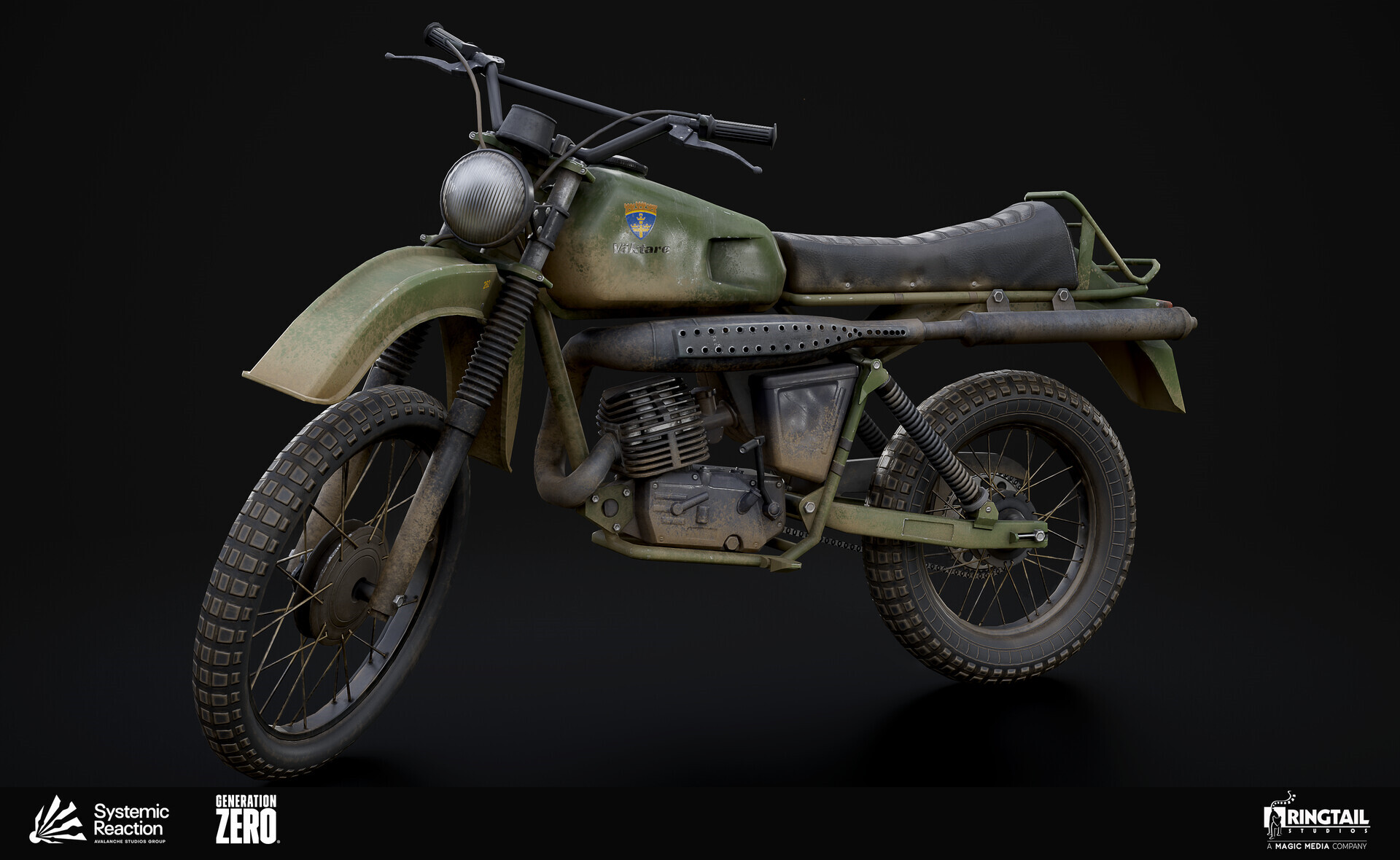
The Ringtail Studios team and the Avalanche Studios Group have enjoyed a lengthy outsourcing and co-development partnership across several projects providing 3D art and QA services. Originally, the relationship began with theHunter series and we’re delighted to be continuing live support for that title. We were also very pleased over the past few years to expand into an outsourcing capacity with Generation Zero. This then developed into co-development as well, with a 3D artist and developer joining the fantastic Avalanche team at Generation Zero.

What goes into a co-development relationship? How does a studio like Avalanche approach it? And why did Ringtail Studios make their cut to elevate from outsourcing to co-development? Let’s dive into these questions and find out.


Avalanche Studios Group and Outsourcing Development

It can be a daunting prospect to introduce third parties into your team. You don’t have to show them everything but you do have to show your internal work, revealing some elements that might be sensitive or private.

For the Avalanche Studios Group, they’re just looking for great creative collaborators. In that way, they view outsourcing and co-development similarly. The goal is a creative and communicative environment where both sides’ aims align strategically and creatively. Onboarding new members is still a big jump and the main requirement is understanding Avalanche Studios Group’s main mission, “create worlds beyond limits”. They want teams who ask questions, who dive head first into the creative challenges, who work proactively towards these worlds that go beyond limitations.

Taking on co-development staff is a bit like onboarding a new hire. It’s something Avalanche take quite seriously, ensuring that they get all the information they need for their work. This includes the tools they need, the access for the right documentation, and even previously created artwork for reference. But it’s not all work, the social aspect is important to them as well. As a hybrid working studio, onboarding distant members in co-development is no hassle. They are brought in, just like any work-from-home staff, integrated completely and included at every step.


What does the Avalanche Studios Group look for in a co-development partner?

A studio this size has a dedicated team looking into potential partners and outsourcing teams. They also look into the evolution for an outsourcing partner transitioning into a co-development partner. For Ringtail Studios, we had “always been a trusted partner. We knew they had, or could find, the resources we needed.”

Because of our previous history as outsourcing partners, in providing quality 3D art, development, and QA services, as well as our reputation, the Avalanche team wanted to find a different way to work together that fitted the project better. It’s good to have a clear definition of your ideals that can be measured against any potential outsourcing studio. For the team at Avalanche, it was people who are passionate about our games. People who “want to help in making our games and our experiences.” There’s more in depth requirements of course that make work easier. Partners who match their speed and tempo for work, those familiar with the tools and skills required for their projects.

With a clear goal and a comprehensive, open line of communication, Avalanche are looking for the people who share their dreams of creating incredible games and experiences. The Ringtail Studios team were delighted to stand with that goal.


Why elevate Ringtail Studios to co-development on Generation Zero?

Aside from our past with the Avalanche Studios Group, we had developed a strong reputation and reliability, especially in our 3D art and art production capabilities. From Avalanche’s point of view, the Ringtail Studios team had “such a broad array of experience and a level of skill to match.” A reliable co-development partner is huge in relieving pressure for a studio to quickly increase their capacity. Ringtail Studios were more than happy to fill that role and help in delivering such a stellar project.

Our current team assisting Avalanche on Generation Zero is made of a 3D artist, taking pieces from concept to creation, and a QA developer. According to their team, our co-developers integrated seamlessly and have assisted every day with the ongoing live service. Our QA developer has become “a pillar of the QA team, inspiring the rest of the QA staff and is a driving force for them to improve.” And our 3D artist is “a constant during time pressures. He’s delivered cool art that the community always loves and inspires us to explore Generation Zero to see what it can grow into.”

We thrive off this kind of feedback and are excited to continue this fruitful partnership. As are the Avalanche Studios Group team who say to look forward to “more art and gaming from us at Avalanche with the fantastic assistance of Ringtail Studios!”

Keep an eye out for the next patch for Generation Zero as they celebrated their 4th anniversary recently! A recent dev blog gives the details and we’re all very excited for the release. If you’re interested in stellar co-development expertize in art and development, get in contact with the Ringtail Studios team today. As part of the Magic Media group, we have the capacity to scale and deliver to your needs no matter the project or service required.
Meeting AAA Game Standards – 3D Concept Art

Article / 31 July 2023

We all love to see concept art, it’s an entertaining look behind the scenes at a finished character or weapon or asset. We get to see what it began as, what has changed, evolved, and been iterated upon. But it’s a huge, and often unsung, part of the creative process in delivering AAA quality assets, characters, and environments.

As 3D art is one of Ringtail Studios’ key focuses and one of our areas of expertise, we decided our next dive into AAA standards had to be this often unseen aspect of the project pipeline, 3D concept art. And to help narrow the focus of this particular article, we’re going to look at some 3D concept art created for sci-fi weapons created by one of our many talented artists.


3D Concept Art Pipeline

The beginning of the 3D concept art pipeline isn’t too dissimilar from the 2D art pipeline. Our artists begin this process with “thumbnails”. You might know this term to refer to small images used as images for YouTube videos. They’re reduced-sized pictures or videos that help viewers or organizers to recognise files. In the process of creating art, thumbnails are small, early sketches that are used to explore and establish early ideas or concepts for the work being created. They’re an excellent place to plan and begin work from.

Our artists use this stage to understand the silhouettes of the weapons and how they might work. It’s important that a level of understanding is created by the artist into how the object or weapon might actually function. These details are key in immersion and quality storytelling.

From there, the artists polish the paint work on the silhouettes to figure out and define the materials for the next stages. From there, the images are exported as a plane into Blender. Blender and Photoshop are the two key tools used in the creation of 3D concept art as they allow seamless work between the 2D and 3D planes. Once in Blender, the artists create a rough 3D model to help display its proportions. Understanding the asset now as a three-dimensional object is key as we’re out of the 2D stage entirely. In this phase of work, artists will work with the materials on the weapon, looking at what works best on a case-by-case basis. Emissive, glossy, matte, these are all considerations for getting the best out of the model.

From here, it’s all about refining that 3D model and getting the best look for 3D concept to really make an impression on the rest of the team or the client. And, in the case of a first-person game, they might even import the 3D model into VR to get a good feel for its proportions to a player and also anticipate animations in the future stages.


References and Inspiration

We’ve discussed before the importance of preparing references as well as repeatedly referred to the importance of good references for the artists. But how do artists prepare great 3D concept art with science fiction weaponry or fantasy armaments.

References always come from real life and modern or historical based games have plenty of direct or adjacent references. Our artists understand that many quality references exist outside the category of the asset being created. For example, in creating these sci-fi pistols and sidearms, our artists used references of power tools! Both in shape and colouring, a variety of common power tools were used instead to inspire the final 3D concept.

But the artists also insist that inspiration can come from anywhere. Observing an animal or architecture, or in this case, industrial equipment!


Taking 3D Concept Art from Good to Great

Making 3D concept art and 3D models is something that almost anyone can do with a little practice. But we wanted to know what really takes a piece of 3D concept art or a 3D model and takes it from good to great.

One of the things that our 3D concept artists emphasised was verisimilitude. Like many fictive creations, the appearance or emulation of it being real and believable were absolutely top of their list. Whether a fictional but real-world based creation or something entirely fanciful and fantastical, it needs to have an ergonomic edge. It needs to make sense; even bizarre alchemical or magical creations still make sense to hold and use. This point of view is also used to ensure that the 3D model will eventually look good from a character’s viewpoint and help with future animation work!

Another aspect to consider is for each piece of 3D concept art to be form fitting. In this way, a more brutal tone or atmosphere can be shown through harsh angles, sharp edges, and aggressive shapes. The weapon of a strong brute should look and seem heavy. And in the same way, the weapon of a sneaky ranger or rogue should look sleek and easy to handle in experienced hands. The key, our artists say, is making the weapon an extension of the player’s power.

The key pleasure in creating 3D concept art for many of our artists is imagining how the piece makes sense in the world it is created for. Thinking about how it might be used by that society and how it came about. And then taking that design and changing it based on what rarity or place it holds in that society. Ultimately, the best 3D art and 3D assets comes from the ones that tell stories. And that is what we at Ringtail Studios do best.


As part of Magic Media we have the combined bandwidth to tackle any project, at any size, in house. Instead of using multiple studios, you can come to your one stop shop, and we can offer a range of services to ensure your project is a success. We hope you enjoyed this look into the creation of AAA-quality 3D concept art! If you’d like to avail of these services, we’d love to hear from you!

Top Tips for Collaborating with Outsourcing Art

Article / 31 July 2023

We recently discussed some key ways to prepare for outsourcing game art, including knowing your outsourcing needs, the importance of preparing a strong brief, and keeping your project description concise for the outsourcing team.

These are three integral preparations to make when approaching outsourcing art but what about the actual collaboration of outsourcing art? Ringtail Studios understand the ins-and-outs of outsourcing art and the growing necessity of outsourcing services in the world of game development. So, we wanted to pass on some of that knowledge from our experiences to help smooth along your outsourcing art requirements.


Define Your Art Style

It’s important for an outsourcing team to know their targets. Not just the strict brief of assets, characters, and environments. But also what particular style they need to deliver it in. This might seem obvious but ensure that your game’s art style is defined and established so that any outsourcing art team have their targets from the start.

With an art style, make sure you have the capacity to display and explain it. Through reference images, previously created art by your own team if you have it, and descriptions, the art style needs to be clear and understandable. When doing this, consider what atmosphere you’re trying to convey and what each asset, character, and environment is supposed to say to the player. This might seem pointless with outsourcing mundane items but the voice and spirit of a game comes through in every element. And it’s very important for that voice to be consistent!


Stay Flexible With Your Style

With a defined art style, it can often become easy to stay too strict in your style. This kind of contradicts the point of a defined and established style but it’s important to stay flexible. This is the key middle ground to find between a defined style and experimentation. A good outsourcing art team will never take huge leaps away from your style or desired end result, but they might experiment.

It’s important to not stay too stringent to your style and to allow for small changes or adjustments. This can help to create a greater sum of the work created by you and collaborative studios. So, keep an eye on the larger picture and never be afraid to take a chance. 


Strong and Constant Communication

This is a constant recommendation and near-requirement for any aspect of collaboration and development. 

When there is ongoing outsourcing art services, communication is absolutely paramount. Without it, problems can arise and spiral out of control quickly. Regular check-ins on the project status and a clear, established line of communication for requests or inquiries will always result in a healthier project.

From the beginning of the collaboration, make it clear who the points of contact are. If everyone understands who they can talk to for any problems that might arise, you’ll find fewer problems causing disruptions.

Ringtail Studios is part of the Magic Media group, where we have the combined bandwidth to tackle any project, at any size, in house. Instead of using multiple studios, you can come to your one stop shop, and we can offer a range of services to ensure your project is a success. If you have need of AAA-quality game art outsourcing services, look no further than Ringtail Studios. Get in touch today! We’re always excited for the next project and challenge.


The Fundamentals of Game Art Outsourcing

Article / 31 July 2023

We’ve talked previously about how best you can prepare your studio for game art outsourcing, such as knowing your needs before you begin discussions and preparing a strong brief. We’ve also discussed some top tips for game art outsourcing that we’ve gathered across our projects, where clients get the most out of their time with our studio. These involve having a clearly defined art style, flexibility with that style, and maintaining a strong line of communication with your outsourcing partner.

Now we’d like to discuss some of the fundamentals behind the processes and decisions to be made around game art outsourcing. Do you need it? Why is game art outsourcing used so frequently? Are there risks involved working with a party outside your studio? These are some of the questions we’d like to answer.


Game Art Outsourcing

Briefly, we’d like to mention the differences between game art services and game art outsourcing. They are effectively the same thing, which is providing art services within a game’s development pipeline. This also sometimes raises the question as to the differences between game development outsourcing and game art outsourcing. 

Usually, the core difference there is that development outsourcing is an end-to-end process of involvement such as the Magic Media group’s co-development and full-cycle development services. Whereas game art outsourcing is less end-to-end and more an additional set of work for a period.


Game Art Outsourcing or Internal Development

The first fundamental of game art outsourcing is simple. Will you use it at all? Before anything else, look at your needs, and what is doable with your team size, budget, and project aspirations. 

Outsourcing is becoming more common. So much so that it’s hard to name a AAA title in the past few years that hasn’t outsourced a significant portion of work. Modern gaming is so big now that these huge, expansive games need so much time and input to execute. 

So, let’s say you’ve decided outsourcing is on the table for your project. Why consider game art outsourcing? What are the fundamental benefits to utilising this service from an industry-leading group like Ringtail Studios.


Overall Project Costs

As we mentioned, outsourcing offers multiple areas of potential savings. While you shouldn’t be relying on game outsourcing to carry your project, it’s a fantastic way to rapidly scale upwards without sacrificing quality. It’s also a great way to save if the budget is looking tight. Based in Eastern Europe, companies like Ringtail Studios have the benefit of cheaper hourly rates with no less talent. 

In addition, when outsourcing you have no need to worry about taking on new staff. You don’t have to consider their hardware or software requirements. You have no worries providing supplies for any of their needs. All of this is not your concern as the studio is ready and willing to deliver high-quality results that are exactly to your specifications. 

Now, that isn’t to say that stellar game art outsourcing is dirt cheap! You do get what you pay for, and an outsourcing studio can be malleable with your budget requests and the extent that you require their input. But for your budget, the quality will always be seen in the cost.


Improve Workflow and Avoid Risk

Strong communication is absolutely paramount, as mentioned in our earlier article on Top Tips for Collaborating with Outsourcing Art. And this communication, matched with additional staff mean a seriously improved workflow. More can be done in a shorter time as the game art outsourcing team seamlessly blends into your own style and methodology. 

There is also an assumption many make that handing out work to a third party can be risky. We understand it can be worrying to do so, but there are more than enough protections in place to cover this.

And an outsourcing studio would not last long if they violated their contracts. Working with clients like Activision, Amazon, and Supermassive Games, means we have a reputation for reliable and high-quality deliveries. The assumption of risk with outsourcing is entirely false as a solid outsourcing studio will not just help you avoid risk; they’ll mitigate it too.


Secrets of Great Game Design: Weapons and Tools

Article / 31 July 2023

As artists, modelers, and co-developers we’ve learnt a lot about the artistic side of game design. There are so many aspects of game design that covering even a fraction in one article would be impossible. Instead, we’ve decided to tackle a few of these elements one at a time. And where better to start than in the tools we put in our players hands. We’ll touch on more than weapons as well, as many games don’t have violent conflict, but for the most part, we’ll set our sights on weapons that aim to take out our players’ enemies.

So, when it comes to designing and creating the tools in your players hands, what’s a few things to keep in mind? There’s a few obvious ones, they have to look and feel cool. They must be fit for purpose and they often must reflect the character or faction they represent. In our own internal competitions, like the ‘Defender Turret’, we have clear set rules for what the weapon or machine must be used for. This is because its purpose and character define its look and feel.


Why are Weapons Important?

Weapons, and tools by extension, are reflections of our characters. Our noble knight uses a regal shield and sword. This represents both defence and offence, the character is as much a protector as an attacker. That tells us who they are and how they are different from the great-axe wielding warrior who clearly has no time for defence.

John Wick, for a more contemporary example, is slick and stylish. But he’s also brutally efficient. His weapons reflect that, they are clean and simple but often heavily modified. They speak of a killer who has done this so many times that he has customised every element of his work to his preference. He treats killing almost like an electrician treats wiring a plug. And his efficiency is shown outside his iconic pistol, his use of any object or item nearby tells us of his lethality even when ‘unarmed’.

We’ve talked before about meeting AAA standards for 3D characters and we will always double down that characterisation is absolutely integral for a successful project. Even single-lane shooters need some kind of character to feel for or root for. And the characters we come to know, love, and hate, define our investment in the game and its narrative.


What to Consider When Designing a Weapon

The points made so far are for weapons and tools fit for a single character or archetype. Instead, how do you go about designing a weapon for a group of players or a faction?

Narrative always holds a place of attention, whether that be a singular character’s narrative or the larger narrative at play. Like our work on Generation Zero, every weapon and item designed has a story behind it. If we are designing for the machines, we are looking at more advanced technology than is available to the players. But the machines are still limited by the late 1970’s timeframe. This serves the narrative of being advanced and more efficient than any player item but still bound by the story we live in.

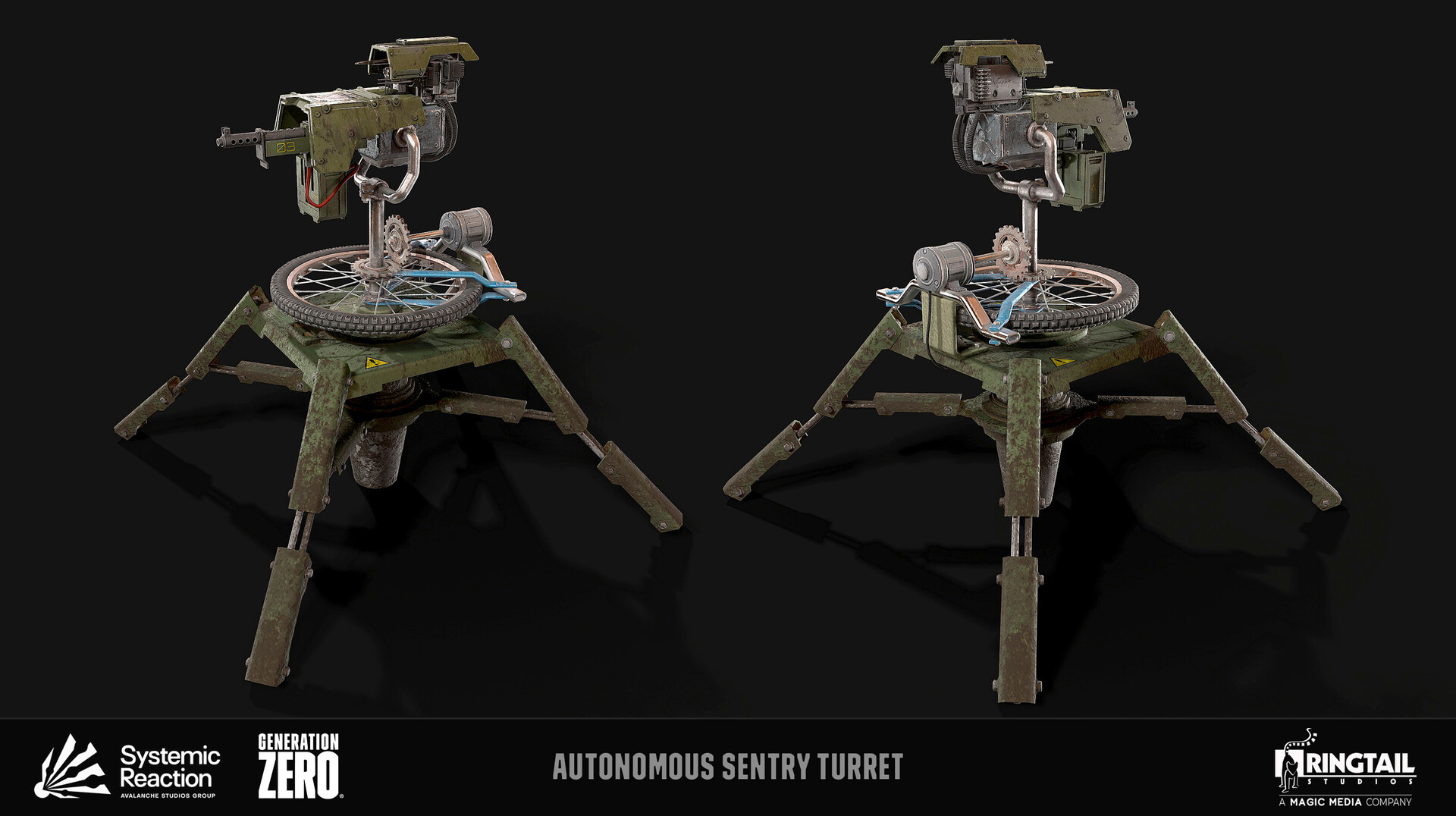
Alternatively, the players weapons and gear are designed with a scavenging mentality. The weapons created by our artists and modelers are a hodgepodge of scavenged and gathered parts. In many places, our artists took existing objects from the game and cannibalised them to create new items. A great example of this is using a destroyed machine’s head as the sensor, the flamethrower from another, and then attach it to a horizontal bike wheel. And just like that, you have an automatic sentry turret that is portable! The key, which our artists cannot stress enough, is that weapons are a fantastic avenue for characterisation and storytelling.

Not every gun and knife needs to tell a story, most modern shooters don’t do it. But for many other titles, weapons and tools serve as insights into a character. Need an easy way to make a villain look cruel and unforgiving? Give them a weapon that reflects it! A foul stalking archer that hunts the player could use barbed and hooked arrows and plenty of gruesome traps that rely on the player’s kinder instincts.

To summarise, consider your character or user of the weapon or tool. Consider your world and your narrative. And always think about what the weapon might say about the one who wields it. Keep an eye on our blogs for more insights into game design, co-development, and art outsourcing services!


As part of Magic Media we have the combined bandwidth to tackle any project, at any size, in house. If you’d like to add some high quality 3D services to your project, we’d love to hear from you. Whether you need art, animation, or co-development services, we can provide stellar results at any level. And if you’d like to consider a career in the gaming industry, check out our career page!

Tips & Tricks for 3D Art in Gaming

Article / 31 July 2023

We often hear about art and artists in gaming. VFX artists and concept artists are mentioned all the time but 3D artists can sometimes go unappreciated. 3D art, as you can imagine in the modern gaming world, is quite important!

So, we sat down with some of Ringtail Studios’ 3D artists to ask about their work, what purpose it services in game development, and if they had any tips or tricks to share.


The Basics of 3D Art in Gaming

The purpose of 3D art in games is fundamental to its existence. 3D art brings games to life. The world, the creatures, and elements within it, are often delivered by 3D artists. Whether environments, characters, or objects, these pieces make up the basis for the game world and its experience. Without these there’s barely a game to play, never mind be immersed in!

The basic skills of a 3D artist includes modeling, texturing, and rendering. And for those looking into tools to learn the art, there’s a few to consider. For 3D modeling, we typically use Maya, 3ds Max, and Blender. ZBrush and Marvelous Designer are great modeling tools for more organic shapes and clothing. Substance Painter is fantastic for texturing and baking textures.

Knowing how to use these tools is what separates a good artist from a great one. The stellar 3D artists at Ringtail Studios understand the array of skills required. Clean and consistent modeling, accurate and grounded texturing and rendering, all of which are supported by a keen eye for detail. Outside of technical skills, our 3D artists emphasise one key tip is to understand how to collaborate and communicate with your team. And that time management is integral in such a time sensitive industry.


Tips for a 3D Artist: What to do, what to avoid

When asked what a 3D artist should focus on, the Ringtail 3D artists had a few answers:

  • Pay attention to the details – even the most fantastical and absurd creations still follow some pattern. Everything has details that can be enhanced and encouraged that will wow players or immerse them further.

  • Keep your 3D models organized – time management is important and having easily navigated models will make everyone’s life easier.

  • Use plenty of reference materials – whether inspiration or a style to follow, reference is the lifeblood of any artistic pursuit. Find the style and aesthetic, fill your board with references and grow from there.

  • Never stop learning – this extends to new techniques, software, and tools. It also includes other artists’ work. Keep up to date technically and mechanically. But never stop learning from other artists, let yourself admire and be inspired by other artists!

They also mentioned a few things to avoid:

  • It’s best, on average, to avoid creating low-quality models with unoptimized wireframe – cutting corners might be quicker but it will hinder you in any longer project.

  • Always check copyrighted material’s permissions – this can cause huge problems for any project. Always be sure you have permission.

  • Don’t overly rely on pre-made assets – they are invaluable in so many projects but don’t use them as a crutch!


Day-to-day of 3D Artists and Last Tips

As mentioned before, collaboration and communication is key for a 3D artist. Our artists say that on a daily basis they will discuss and collaborate with game designers, concept artists, programmers, animators, and other 3D artists. This is all done in the pursuit of style consistency and clean integration.

For any project, the visual style and artistic consistency is paramount. The artists at Ringtail say that clearly established style guidelines early in the development process is key, as is a wealth of good reference materials to support it. For example, one of Ringtail Studios’ ongoing projects is co-development with Avalanche Studios’, Generation Zero. Where a machine uprising has left humanity fighting for survival in the 1980s. The style, consistent and reliable, is a rusted and DIY-look for every piece of survivor equipment!

Finally, the artists make it clear that your skill and growth through learning is integral in the highly competitive field of 3D art and game design.


If you’re in need of high-quality and consistent 3D art and art production, get in contact today and start benefiting from streamlined, scalable, and reliable outsourcing services. As part of Magic Media we have the combined bandwidth to tackle any project, at any size, in house. Instead of using multiple studios, you can come to your one stop shop, and we can offer a range of services to ensure your project is a success.

Ringtail Studios’ Fundamentals of Concept Art

Article / 31 July 2023

As the dedicated art development team in Magic Media, we’ve always emphasised the importance of concept art and a solid starting point for any piece of artwork. Often overlooked by many outside of the industry, concept art is an absolutely integral piece of work for every great character, environment, and asset you’ve enjoyed in gaming.

There is a lot of work behind great concept art and we discussed this with the fantastic artists in the Magic Media team.


Why is Concept Art Important?

If you’re uncertain and looking into the value of concept art as a process, look no further than its purpose. Why does this step exist in art development?

The concept artists on staff described the stage as a translation of ideas. Whether you’re given the brief, reference images, or descriptions of the concept, the artists are tasked with collating it and bringing it to life visually. The key question that our artists impress upon this stage is “what is being conveyed to the player?”. Concept art is the beginning, the first moment that this question is approached. As the first step, the idea is explored and the teams begin to understand an idea of what they’re working with and what is being shown to players.

Concept art isn’t just for this visual delivery, it also helps to keep the workflow balanced. The bulk of adjustments and alterations will happen in this early stage, where things are still fluid and changeable. Once the concept art is in place and it is moved on, changes become more difficult to deliver. Changing a concept is a lot easier than changing a 3D model or a nearly completed model’s animation rig. The more exploration and confirmed decisions that happen during concept art means a smoother pipeline for the rest of the art’s creation. Smoother pipeline means less time and more efficient cost.


The Core Principles of Concept Art

The Magic Media art director and our entire art team often sound like a broken record regarding fundamentals. The basics and core elements of art development help create a great artist. If you’re looking to hire an artist or art team, look at how they utilise their fundamentals.

Things like anatomy, shape, colour, perspective, rhythm, and silhouette. Concept artists are often referred to as “visual knowledge chimeras”, an incredible mixture of talent and skill. All of which is necessary to properly deliver high-quality concept art. The core principles also include things like readability, composition, and use of light. Keep an eye out for these, they will truly make your game’s visual communication standout.


Separating Good from Great Concept Art

The fundamentals are key, as we’ve said, but what about outside of the mechanical ability and experience? One of Magic Media’s lead game concept artists spoke about curiosity. Whether a fascination in history or biology or engineering, they spoke about the necessity of seeing what rules the world has established and how those rules can be changed or broken. This is key in developing new concept art and especially in worlds where our rules aren’t followed.

The question of “what if…?” is huge for exploring new worlds and concepts. Simple alternate history events like, “what if the World Wars ended differently?”. Or geographical questions, “what if the Earth was 80% land instead of water?” or “what if there were black, glass pyramids in the Arctic?”. These questions snowball into more questions and queries. Following these questions, embracing your curiosity, and deciding what the answers might be are integral to great concept art. Working on game concept art like that is a fantastic way to explore new worlds and implement key details that bring these worlds to life.

Another way to elevate game concept art from good to great is to avoid treating them as separate entities. Our artists always work on their concept art as contextual to a wider picture and story. Even though they are created in isolation, every piece of work is part of something bigger. Understanding and implementing this context is a fantastic way to deliver a cohesive visual style that feels real and alive.

If you’re in need of high-quality and consistent 3D art and art production, get in contact today and start benefiting from streamlined, scalable, and reliable outsourcing services. As part of Magic Media we have the combined bandwidth to tackle any project, at any size, in house. Instead of using multiple studios, you can come to your one stop shop, and we can offer a range of services to ensure your project is a success.

How to Develop an Art Style for Your Game?

Article / 31 July 2023

When it comes to developing an art style for your game, one of the biggest questions is “hyper-realistic vs stylized?” A good game art production team will be able to work with you and deliver a game art style that you’re happy with but how do you begin that journey?

In the blog that previously addressed the topic of hyper-realistic art style vs stylized art style, we touched on three key considerations. They were budget, target market, and the influence of management. Aside from these key points, there’s a lot of work, effort, and passion that go into creating a great game art style. After discussing the question with a pair of our game concept artists and game 3D artists, we have a few more key elements that any aspiring game creator should be aware of.


Developing your Game’s Art Style for the Intended Experience

Developing an art style is the sum of many parts. One of the Magic Media group’s artists spoke on understanding the game’s vision and intent. What is the concept for the game and how might that be conveyed visually? What genre are you looking to be in? Your target audience was mentioned in our previous blog but it is absolutely fundamental in achieving a quality game art style that is successful on launch.

The goal is to create an art style for your game that complements the intended experience. Our game artists will work on these elements throughout the game art production lifecycle. Things like the colour palette, shapes, and textures, will all influence the mood and tone of the game. It’s important to understand the impact these elements can have on your game’s experience. The game art style will be visually speaking to every player regardless of your intent for it to do so.


Game Art Style Development in Practice

An example of this would be working on an adventure game in a paper world. Maybe aimed at young adults and younger audiences. Utilising proper references, our art production team would begin to look at children’s drawings, particularly in chalk, marker, and crayon. Additionally, children’s toys could be referenced for their design and style. Combined with a soft and playful colour palette, smoothing out shapes and any hard edges, and you’ve got a fun and innocent art style.

Alternatively, maybe the paper world game isn’t for children. Maybe you’re designing an art style that aims to draw players into a calm, playful world but in fact is a horror or thriller experience. The references would be the same but our game 3D artists and game concept art team would utilise the references differently. By dirtying the style, adding grime and a layer of dirt to the colours, you can immediately convey a subconscious discomfort to players. Edges can be enhanced instead of removed, shapes can be encouraged into sharp and aggressive angles. 


Creating your Game Art Style with References

For good game art production, references are everything. You might have a clear idea in mind but that can be difficult to understand without a visual reference. Our game art teams will gather swathes of references for every project they’re on. Not just modern references but even illustrations, blueprints, and technical documents from the beginning of the 20th Century onwards. Understanding the audience of the game and the feeling you wish to deliver is a compass for choosing your game art style.

References, however, are the lifeblood once that compass direction has been set. Whether working internally, or with an outsourcing team like us and the Magic Media group, the more references you can gather the better! The game concept artists, 2D artists, and 3D artists can each take their inspiration from the references supplied. With consistent references, deciding on your game art style becomes significantly easier.

Once you have decided on a hyper-realistic or stylized game art style, you can then begin to gather appropriate references from any form of entertainment you can. The best advice our game artists and seasoned game art production team can offer is to narrow down your style based on references and keep it consistent!

Ringtail Studios is more than capable of tackling either style and at any point of the spectrum of art. If you’d like our help in developing your game’s art style, get in touch! As part of the Magic Media group, we have the capacity to handle projects of any size as well as the expanded service offerings for art production, full-cycle development, co-development, VFX, and more!